Search

Showing posts with label Women's Issues. Show all posts

Wednesday, April 14, 2021

Face: One Square Foot of Skin

 By Justine Bateman


Akashic     2021

270 pages     Social Science

Tonight as I was watching the PBS news, I paid special attention to Judy Woodruff, her guest Senator Capito, and a reporter Charlayne Hunter-Gault. These were all women in their 60s and 70s and they presented themselves in all their power, faces and all. They are the women that actress, writer, director and producer, Justine Bateman, is addressing in her new book Face: One Square Foot of Skin. In this book, Bateman examines aging faces and describes the discrepancy between men’s aging faces and women’s aging faces. She says that “traditionally, men’s older faces signify power, and women’s older faces signify a loss of power.” She goes on to say. “I hated the idea that half the population was perhaps spending the entire second half of their lives ashamed and apologetic that their faces had aged naturally.” I was proud to see those women on the news. They did not appear at all to be ashamed of their beautiful, intelligent faces.

As Bateman entered her forties, she found that she was being treated differently than when she had been a young, fresh-faced ingenue. As a consequence, Bateman chose to explore the issue of women’s faces through very short stories that are based on interviews she made with women of all ages. The stories are intimate and are significant examples of the tenuous nature of women’s self-assurance and confidence. The stories are very revealing because Bateman argues that a woman’s confidence should grow rather than deteriorate as she ages. It should not be destroyed by society’s misled attitude about that “one square foot of skin.” I saw this happening recently when a woman I knew in her early 50s was forced to find a new job. She knew that she was more than qualified for the job for which she was interviewing, but she worried that she might be too old. Did her face have too many lines? Were her eyes puffy? Was her neck saggy? Would her face be judged rather than her immense capabilities.

Bateman feels that cosmetic surgery is a “Ponzi Scheme.” She wants women to walk out into the world with an attitude that says, “Fuck you! I look great.” I would imagine that for celebrity women like Bateman, the pressure to “fix your face" is especially intense. Occasionally, I get caught up looking at Facebook entries headed, “You won’t believe how (so and so) looks now.” Bateman has made me look at myself much more critically in the mirror, scanning my face for wrinkles, etc. Other than a saggy neck and no eyelids or eyelashes, I am looking my age. I think I feel worse about my flabby upper arm than by my saggy neck.

Last night my book club met virtually. There are twelve women in the club, with ages from 38 to 78. They are all extremely intelligent, confident women with faces to match. We were having a Zoom call with a well-known author, who was obviously impressed by our analysis of his book and of our questions. I was so proud to be one of those beautiful, strong women.

This is what Bateman’s book emphasizes—celebrate who you are, wrinkles and all. As she says, "So, let's imagine that our one-of-a-kind faces are a new kind of NFT, a currency backed by a life lived without hesitation in the sunshine of good days and bad." Read Face: One Square Food of Skin in conjunction with Women Rowing North that I reviewed last month. Your confidence will be renewed.

An interview with Justine Bateman in Vanity Fair. Time magazine’s review concludes that Face is "an engrossing look at an issue that continues to be problematic for millions of women every day."

Saturday, June 3, 2017

City Mouse


By Stacey Lender
Akashic Books     2017
309 pages     Fiction

Jessica and her husband Aaron, both busy professionals, are living in a one-bedroom flat in Manhattan. With two toddlers, it is just too small, too crowded, and too lacking in privacy. Aaron brings up the possibility of moving to the suburbs, a notion that Jessica finds horrifying, but realizes that for the sake of the family, it may be the best choice. They find a modern Victorian in the village of Suffern, move in, and Jessica tries to adapt to suburban life. It's pretty hard to do because she has a long commute into the city four days a week, working from home on Friday. Aaron travels a great deal, and Jessica is never sure that this suburban life is all it's cracked up to be. Then Aaron and Jessica meet the neighbors and are quickly included in the social life of the young parents who make up the majority of the preschool community where their daughter is enrolled. 

The women Jessica meets are primarily stay-at-home moms of young children, and frankly, are boring, catty, and mean-spirited. Yet, they are friendly and accepting of Jessica and her work schedule. Jessica tries to volunteer as much as she can, and she continues to seek out women with whom she has more in common, including a young Hispanic mother who is studying for a degree and is doing some fascinating research about Alexander Hamilton and Aaron Burr. (By the way, I found her research to be the most interesting part of the book.)

The women who take the major roles are extremely petty with few interests beyond their children and their partying. They aren't the type of people Jessica would have found interesting if she were living in the city—nor would she have spent any time with them. Are they typical of small town, suburban women? I don't really think so. At one point, after the rather shocking weekend trip the "friends" take, Jessica bemoans the fact that she didn't work hard enough to seek out more like-minded women. She settled and almost paid a huge price. Ultimately, the couple decides to move back to the city—this time to Brooklyn. Jessica muses: "I thought about how I'd been spinning in circles for so long, like so many mothers, trying to live a life that was supposed to be best for my kids without losing the essential bits of myself. " She wonders about how many other women were living rather unfulfilled lives "twirling desperate to find the perfect place to land."

My first inclination was that City Mouse was going to be like Big Little Lies by Liane Moriarty or Stepford Wives by Ira Levin. However, there is no murder to keep you reading like in Big Little Lies and, unlike Stepford Wives, the husbands play a very small role in City Mouse—in this case, the wives are the manipulators. While the climax of the book is scandalous, it is absolutely as small-minded as the rest of the book. 

The value of City Mouse lies in its exploration of the notion of "having it all." If you have trouble finding your place in a culture that seems alien and shallow to you, is it possible to have it all? On the other hand, is suburban life as bad as Lender implies? My thinking is that any community has both the good and the bad, and a discerning resident can find like-minded people virtually anywhere. 

I was interested in an item on the PBS News Hour last night that discussed a group of women in rural West Virginia, who are defying the prevailing wisdom of their community and are speaking out regarding the policies of President Trump. Jessica, the City Mouse, might have found some alliances there. 

Stacey Lender, the author of City Mouse, is a marketing executive for entertainment brands, a career very similar to her character Jessica. Unlike Jessica, however, she lives in Manhattan with her husband and two daughters.

Stacey Lender website.

Tuesday, February 7, 2017

Fearless and Free


by Wendy Sachs
American Management Association     2017
226 pages     Nonfiction

The subtitle of Wendy Sachs' excellent look at women and their careers is: How Smart Women Pivot and Relaunch Their Careers. In it, Sachs tells her own story of the multiple iterations of her career and encourages her women readers to be creative, resilient, and passionate about their career choices and career plans.

In story after story, Sachs shows how women create opportunities for themselves—or seize opportunities—and shine in whatever career they choose. She suggests that in today's world, opportunities abound for the determined, creative woman. She also asserts that most women will have several careers in their lifetimes, with agility being a must-have skill. She says:

"This book is for women at all stages of their professional journeys. Some may be looking for a total relaunch. Others are trying to reposition themselves to stay relevant. Still more may be looking to get back into the game after taking time off to raise kids and need the confidence and direction to take the first step." 

I kept seeing my daughters, step-daughters, and daughters-in-law in the context of the book. They are all attempting to be resilient, relevant, and challenged.  Actually, I saw myself as I figured out what career would best meld with my life as a widowed mother of three. Then, what I would do after I retired from my education career. Actually, I have made 4 different career moves in the years since I retired. 

At the same time that Sachs is telling all these wonderful and inspiring stories, she is also telling women about how to be successful in a male-dominated world. Her story about Hilary Clinton is a case in point, and it is certainly something that all the women in the country observed in this last election. The question kept coming up, "How is a woman supposed to act?" I appreciated her advice, for example, to stop apologizing all the time. Just tell it how it is.

Well, for sure, the world of women is changing rapidly, and Wendy Sachs and her book should prove inspiration for an entire new generation of women who must be agile enough to take advantage of the change as it happens.

About the Author
WENDY SACHS is the author of Fearless and Free (AMACOM; 2017) and a master of the career pivot. An Emmy-award winning TV news producer, Wendy has worked at Dateline NBC, Fox, and CNN. She also worked as a Capitol Hill press secretary, public relations executive, CNN contributor, content strategist and editor-in-chief of Care.com. In a more random role, Wendy appeared as the on-air spokesperson for Trip Advisor. A frequent speaker, Wendy has written about work/life and women’s issues for multiple publications, including The New York Times, CNN.com, the Huffington Post and Refinery29. She has appeared on dozens of radio and TV shows, including Good Morning America, NBC's Today, Fox and CNN’s Headline News. Wendy lives with her husband and two children in South Orange, New Jersey. For more information, please visit wendysachs.com and follow the author on Facebook and Twitter

Saturday, April 23, 2016

My Life on the Road


by Gloria Steinem
Random House  2015
278 pages     Memoir

Gloria Steinem's memoir My Life on the Road begs to be discussed. It is one thing to read the book on your own but it is totally another thing to read it in a book club of opinionated women. Especially women with the age diversity of my club (the youngest is 32 and the oldest is 73.) We are having babies and grandbabies, starting careers and retiring all at the same time. 

The reviewer in the Washington Post calls this iconic woman's memoir "a travel diary of the women's movement." The reviewer also says that Steinem is relentless in promoting what she believes in, and this is probably the case, but the book is also a testimony of a brilliant and incredibly curious woman, who finds interest in nearly everything she witnesses and every life she touches. She keeps moving, she keeps asking questions, and she keeps listening.

Who else could write such an engaging chapter about taxi drivers and how every time you enter a taxi cab, you are entering a unique world with a unique driver with a unique point of view? Who else could go from college campus to college campus and continue to be inspired and motivated visit after visit? Who else could weigh her options when considering whether to support Barack Obama or Hilary Clinton? Who else could have kept close to African American and Native American feminists for so many years?  Who else could still be public speaking into her 80s? 

Steinem's father was an itinerant salesman, and in the first section of the book, Steinem acknowledges that influence as she began her life on the road. Apparently she has settled down in a home now, but for most of her adult life, she was on the road. The amazing thing is that she remembered so many incidents from her life. Is she a name-dropper? Most certainly. But it isn't just aimless namedropping; Steinem has a message to deliver from every encounter; something she learned from each celebrity or politician or taxi driver, indicating that she is not overcome by celebrity.

Believe me, our book club discussion could have gone on for hours. We each had stories to tell about inequality or injustice or slights or harassment. Most of us are, or were, educators, and we are grateful that we were able to have fulfilling careers without having to deal with income inequality. The teacher's union took care of that for us. One of the young women told about a beautiful clerk in the store her husband manages.constantly harassed by a middle-aged male customer. She told the store manager to not say anything to the customer because he buys a lot of stuff and she needs the sales. Another woman told about a principal who only hired young, pretty teachers. We all talked about abortion legislation, unequal pay, lack of respect, and all the other issues that still plague women.

As I said at the beginning, share and discuss My Life on the Road. If you read it, and I highly recommend that you do, find someone to share a discussion with. Steinem loves to deal with issues in what she calls "talking circles" in which people feel secure to say things that they might not share in large gatherings. Find a talking circle to share this meaningful book by a great woman.

An excellent review in the New York Times.

By the way, a new biography of Helen Gurley Brown, called Enter Helen by Brooke Hauser, comes out this week. Here is another side of the feminist story. There was an excellent review of Enter Helen in the Wall Street Journal today. The book is on my Kindle, but I haven't gotten to it yet.

Thursday, July 30, 2015

The Race For Paris


by Meg Waite Clayton
Harper     2015
336 pages    
 Historical Fiction

Books about World War II seem to be ubiquitous in 2015. My book club read All the Light We Cannot See earlier this year, but I have pretty much resisted reading any of the many other books until Clayton's agent sent me The Race for Paris

Jane is a journalist for a Nashville TN newspaper. She meets Olivia (Liv), a photographer for her husband's New York newspaper,  at a hospital in France shortly after the Normandy invasion. They have been stuck reporting from the hospital for quite some time and have been denied access to the forward movement of the troops because of military regulations and gender barriers. When they meet up with Fletcher, a British photojournalist, they take matters into their own hands, jump into his jeep, and race the allied troops toward the liberation of Paris.
.
Worried about exposing themselves to the MPs that are tracking them, Jane and Liv send out their articles and photographs anonymously or under Fletcher's name as they move relentlessly forward keeping pace with the troops. Jane muses about why they were putting themselves so prominently into harm's way: "a chance at immortality when mortality had you by the throat." They see it all and report on it all. Liv takes extraordinary risks to catch the action with her camera while Jane types up her stories on a portable typewriter. Along the way, they both fall for Fletcher, who always is seeking to protect them—even when they don't want to be protected. The three bond in a powerful way that sustains them and reverberates throughout the rest of their lives.

The Race for Paris is filled with relentless action that is vividly represented in the text. For example, Jane reports: "Liv moved into the valley to better photograph the fleeing Germans, and because she did, Fletcher and I did as well. We went down toward the confetti of paper and clothing and supplies, medical paraphernalia and food packages. The twisted metal of abandoned vehicles. Blackened trees. Well-creased letters stuck in the mud, and frayed photographs of wives, of children, of parents and siblings, of sisters and brothers. Sprawling tangles of hooves and necks and manes and bleeding horseflesh, and corpses." At the same time that they are reporting on the action, Jane poignantly reflects: "I wanted to be in a place where the sun always shone and the world was quiet, no gunshots in the distance, no stench of death."
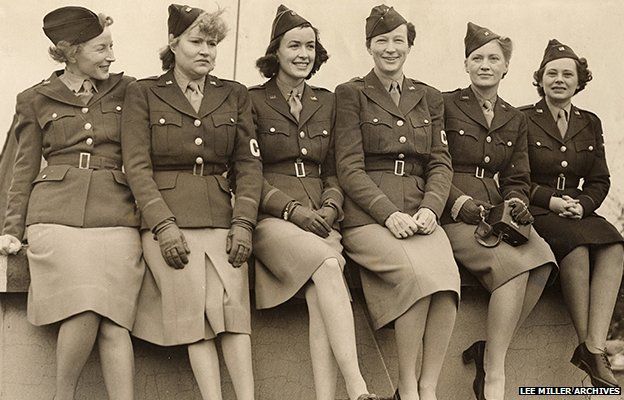
American Reporters including Kirkpatrick and Miller

Clayton says that she spent years researching the women reporters and photographers of World War II, including Margaret Burke White, Helen Kirkpatrick, and Lee Miller. At the heading of each chapter, there is a quote from a war reporter or photographer, and the text is peppered with references to other famous wartime personalities, including Ernie Pyle and Earnest Hemingway. It is obvious that Clayton took enormous care with the historical accuracy of the novel. For the most part, the plot moves along, with some scenes breathtakingly compelling. I wanted the climax of the book to occur about 50 pages before if actually happened, but as Liv becomes more and more reckless in her photography, I knew that something tragic was about to happen—and then it did.

The Race for Paris is not a beach read. It is designed to appeal to the World War II historical reader as well as the reader interested in women's rights and women's history. I am none of those people, but I was completely captivated by the story and the charm of the characters. I can only imagine how consumed Clayton must have been as she researched and wrote this most compelling novel. I recommend it. The Race for Paris has already appeared on several "Best Books" lists including the BBC and Bookreporter.

Meg Waite Clayton's website.
A review in Bookreporter.
An article from the BBC website about American women reporters during WW2.