Search

Showing posts with label France. Show all posts

Wednesday, September 4, 2019

The Second Worst Restaurant in France


By Alexander McCall Smith

Pantheon     2019
256 pages     Fiction

A reader doesn’t pick up an Alexander McCall Smith book to delve into an elaborate, drawn-out plot. The reader chooses to read an Alexander McCall Smith book to be entertained. The Second Worst Restaurant in France is classic McCall Smith. It is witty and wise, with delightful characters, and cracking-good dialogue. Is it brilliant? No. Is it fun? Yes.

Paul Stuart is a Scottish cookbook author. He first appears in the book, My Italian Bulldozer, which I have not read. While that book has Paul writing a food guide to Tuscany, he is now under contract to write a larger tome about the philosophy of food—a task that is formidable, and he is having trouble getting a handle on the topic.

 Paul is an appealing character because, above all, he is very accommodating and understanding. We find out very early in The Second Worst Restaurant that he is not fond of cats, and he is driven away from his home by his girlfriend’s cats. A cousin, Chloe, offers to take him with her to a small village in France where she has rented a house. Paul thinks that if he separates from his girlfriend and her cats and goes to a quiet place, he might make some progress on writing his book.

When they get to the village, Paul finds that it has little to offer except a very good bakery and a very bad restaurant. Some actually consider it to be the “second worst restaurant in France.” Paul takes on the task of improving the restaurant because one of the cooks actually is quite talented. This part of the plot reads like a Restaurant Impossible episode. But again, we don’t read McCall Smith books for their sterling plots.

We read his books for characters like Chloe, who is brilliant, annoying, and memorable. Paul remarks that Chloe is a throwback to earlier times “when people made tactless remarks and rarely apologized for what they were.” Chloe can talk about everyone and everything, but Paul finds himself worrying about how much truth there is in her endless commentary. I think that Chloe is a remarkable character, and I found myself appreciating everything she had to say. Here is one quote I enjoyed: “I read the other day about a Corsican saint called St. Baltazaru of Calvi, who performed the miracle of changing wild boar into sausages without benefit of a charcutier. Apparently, he just had to touch a wild boar and it would become sausages—just like that.”

McCall Smith is an extremely prolific author of several series, all with delightful characters. The books are all a lot of fun. My favorite series remains The No. 1 Ladies Detective Agency books, which are based in Botswana, where McCall Smith taught Law at the University of Botswana. 

I needed something light and fun to read on a long plane ride, and The Second Worst Restaurant in France was perfect. It almost made me want to head to France to seek out the restaurant and see how much it had improved.
  

Wednesday, August 2, 2017

Traveling with Pomegranates: A Mother-Daughter Story


by Sue Monk Kidd and Ann Kidd Taylor
Viking     2010
304 pages     Spiritual Memoir

In the late 1990s, Sue Monk Kidd and her young adult daughter, Ann, traveled twice to several sites in Greece and France. Kidd, the author of Secret Life of Bees, The Mermaid Chair, and The Invention of Wings  among other works, was in a creative funk. She was turning 50 and feeling her age. She had begun thinking about a fiction book that she wanted to write that involved bees, a young girl, and a Black Madonna. 

The second trip the mother-daughter duo took to Greece helped her ferment and develop the concept of the sacred feminine in her mind. She says that "When I visited Mary's House in Ephesus during Ann's and my first trip, the theological polarization I felt about how to relate to Mary began to be resolved." Each event in the story of Mary "feels like a universal story, offering points of entry into my own experience." 

Ann had just graduated from university and had broken up with her boyfriend when the pair took their first trip. She, too, was in a funk and quite depressed. A university trip to Greece had convinced her that she wanted to study ancient Greece for a graduate degree, but unfortunately, she was not admitted into her graduate school of choice. By the second trip, Ann is in a better place emotionally and is planning to be married soon after they return from their travels. During this trip, she debates whether to become a writer. On both trips, she ponders the poem by David Whyte that says, "Give up all other worlds except the one to which you belong." What world does she belong in? She finds that to be the mission of her travels.                                                              

In each section of Traveling with Pomegranates, Sue and Ann share their journals and their impressions of the area they are visiting. They also express their spiritual growth and their heart's longings. Sue purchases glass pomegranate charms to wear on necklaces as a way to counteract what she sees as a growing estrangement between mother and daughter. The necklaces serve as a reminder of the story of Demeter rescuing her daughter Persephone from the underworld. They find the answers to their inner searching through their growing understanding of the Madonna and other images of the sacred feminine. Both grow from these travel experiences—individually and together.

I found Traveling with Pomegranates to be both intriguing and tedious. The most intriguing part for me was how Sue formulated the concepts that became her first novel, The Secret Life of Bees. The tedious parts were their inner arguments, which became strained and repetitive as the pair journeyed. On the other hand, the book is an excellent example of how travel can formulate ideas and creative expression. 

I read the book for the monthly spiritual growth book group at my church. It engendered a great deal of discussion, but several times, members of the group were heard to say, "Well, it wasn't my favorite." Many felt that the publishing of the book was Sue Monk Kidd's attempt to help her daughter Ann Kidd Taylor begin her career as a writer. But, everyone agreed to reread Secret Life of Bees for next month's book group, citing the introduction we got from Ann in Traveling with Pomegranates.

Sunday, January 10, 2016

After the Crash


by Michael Bussi
Hachette    2015
376 pages     Mystery

After the Crash by Michael Bussi is pure mystery-lovers' escapism—implausible but intriguing at the same time. The events of the book occur in the 1980s and 1990s, and the story is all woven together by a report written by a private investigator, Credule Grand-Duc,  eighteen years after the crash of an airliner in the Jural mountains in 1980. 

The plane had been on a trip from Istanbul to Paris. On the plane were two families with infant daughters, Emilie and Lyse-Rose; one returning to a rich family and the other returning to a working class family. Only one infant survives and captures the media's attention as "the miracle baby", but it is impossible to deduce which of the two babies has survived. The de Carville family (the rich grandparents, of course) hire Grand-Duc to use whatever means possible to solve the mystery within 18 years. Much of the novel evolves in 1998 as the eighteen years end. Lyse-Rose's sister, Malvina de Carville, and Emilie's brother, Marc Vitral, have spent much of their lives also trying to solve the mystery. The surviving girl is now affectionately called Lylie, a combination of both babies' names, and she is the first to to receive Grand-Duc's report. She then promptly disappears, and the reader doesn't know until the end of the book where she has gone.

You ask, "Why didn't they just use DNA testing to prove which girl survived?" Well, Grand-Duc did conduct the test, after the test was developed, but much of the plot takes place before the DNA test was invented. The mystery is perplexing, which is what makes this novel so attractive; the reader is completely caught  up in trying to figure things out, and the author leaves little clues that worry the reader's brain until the mystery is solved. It is the story of class, family ties, love, and obsession.

Bussi is a French writer and professor.After the Crash is his first international success and the first of his novels to be translated into English. (The translator is Sam Taylor). This book has sold nearly one million copies and appeared in American book stores this week. 
He is quite well known in France but

The headline in the Boston Globe review says "it's best to just enjoy the ride," and I would agree. There is much that is implausible. "Parts of “After the Crash” have elements of over-the-top Gothic melodrama, evoking everything from V.C. Andrews’s “Flowers in the Attic” to cheesy horror movies, but Bussi’s tucked a lot of enjoyable — and enjoyably surprising — pieces into his puzzle as well, making the novel a drawn-out, page-turning tease." I do have to mention that I was disappointed in the ending. I felt that Bussi rushed the conclusion. The ride had left me completely drained, and as I closed the book, I sighed and felt totally let down. Was it still a fun ride? Absolutely.

 Early on in my reading of After the Crash, I was reminded of a plane crash novel that I read several years ago, The Three, by Sarah Lotz. Although a bit more apocalyptic, The Three is chilling reading and equally as interesting. Check it out as well. 

 The review in the Boston Globe.

Thursday, July 30, 2015

The Race For Paris


by Meg Waite Clayton
Harper     2015
336 pages    
 Historical Fiction

Books about World War II seem to be ubiquitous in 2015. My book club read All the Light We Cannot See earlier this year, but I have pretty much resisted reading any of the many other books until Clayton's agent sent me The Race for Paris

Jane is a journalist for a Nashville TN newspaper. She meets Olivia (Liv), a photographer for her husband's New York newspaper,  at a hospital in France shortly after the Normandy invasion. They have been stuck reporting from the hospital for quite some time and have been denied access to the forward movement of the troops because of military regulations and gender barriers. When they meet up with Fletcher, a British photojournalist, they take matters into their own hands, jump into his jeep, and race the allied troops toward the liberation of Paris.
.
Worried about exposing themselves to the MPs that are tracking them, Jane and Liv send out their articles and photographs anonymously or under Fletcher's name as they move relentlessly forward keeping pace with the troops. Jane muses about why they were putting themselves so prominently into harm's way: "a chance at immortality when mortality had you by the throat." They see it all and report on it all. Liv takes extraordinary risks to catch the action with her camera while Jane types up her stories on a portable typewriter. Along the way, they both fall for Fletcher, who always is seeking to protect them—even when they don't want to be protected. The three bond in a powerful way that sustains them and reverberates throughout the rest of their lives.

The Race for Paris is filled with relentless action that is vividly represented in the text. For example, Jane reports: "Liv moved into the valley to better photograph the fleeing Germans, and because she did, Fletcher and I did as well. We went down toward the confetti of paper and clothing and supplies, medical paraphernalia and food packages. The twisted metal of abandoned vehicles. Blackened trees. Well-creased letters stuck in the mud, and frayed photographs of wives, of children, of parents and siblings, of sisters and brothers. Sprawling tangles of hooves and necks and manes and bleeding horseflesh, and corpses." At the same time that they are reporting on the action, Jane poignantly reflects: "I wanted to be in a place where the sun always shone and the world was quiet, no gunshots in the distance, no stench of death."
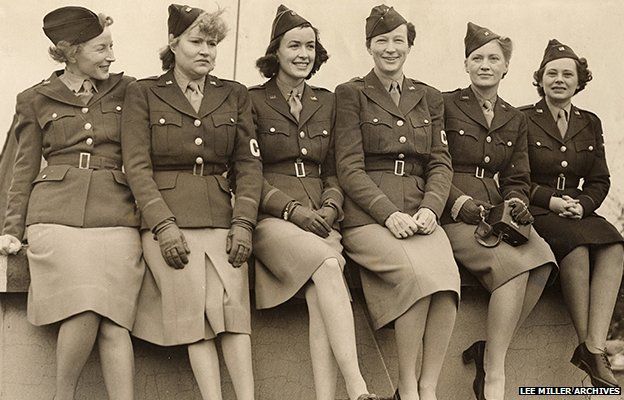
American Reporters including Kirkpatrick and Miller

Clayton says that she spent years researching the women reporters and photographers of World War II, including Margaret Burke White, Helen Kirkpatrick, and Lee Miller. At the heading of each chapter, there is a quote from a war reporter or photographer, and the text is peppered with references to other famous wartime personalities, including Ernie Pyle and Earnest Hemingway. It is obvious that Clayton took enormous care with the historical accuracy of the novel. For the most part, the plot moves along, with some scenes breathtakingly compelling. I wanted the climax of the book to occur about 50 pages before if actually happened, but as Liv becomes more and more reckless in her photography, I knew that something tragic was about to happen—and then it did.

The Race for Paris is not a beach read. It is designed to appeal to the World War II historical reader as well as the reader interested in women's rights and women's history. I am none of those people, but I was completely captivated by the story and the charm of the characters. I can only imagine how consumed Clayton must have been as she researched and wrote this most compelling novel. I recommend it. The Race for Paris has already appeared on several "Best Books" lists including the BBC and Bookreporter.

Meg Waite Clayton's website.
A review in Bookreporter.
An article from the BBC website about American women reporters during WW2.

Thursday, April 9, 2015

Picnic in Provence


By Elizabeth Bard
Little, Brown 2015
384 Pages Memoir/Cookbook

"Impose your chance, hold tight to your happiness, and go toward your risk. Looking your way, they’ll follow." Rene Char.
I am trying to understand why I am attracted to memoirs about cooking. I have read several over the past few years. Picnic in Provence attracted me because I am feeling trapped in my house and traveling to Provence via food seemed like a good idea.

This is the second in a series of memoirs Bard has written that involves her life cooking, eating and creating a life in France. The first, Lunch in Paris, takes Bard from the United States to Paris where she meets her husband, Gwendal, who is a digital movie producer. Picnic in Provence begins with the couple and their infant son traveling “en vacance” to a small village in Provence, Céreste, following the trail of a French poet and resistance fighter, Rene Char. When they were offered an opportunity to buy the house where Char had lived and worked, they jumped at the chance, bought the house, and changed their lives, entirely. As Bard says, “We have stumbled into an unlikely life. All the five-year plans in the world wouldn’t have gotten us here. Yet it’s exactly the right place to be.”

Even though she has been in France for ten years, Bard still feels like she has a lot to learn in order to be considered French. At the same time that she feels this personal alienation, she  also feels very close to the community that they have adopted, and that has adopted them. Bard is bold enough to ask lots of food questions, and the villagers are eager to help her. She learns to make the foods of the region, and enjoys meeting the farmers of the area and learning how the foods of the area are picked and are cooked.
Intermingled with the cooking, there are some moving moments as Bard learns how to be a mother and how to forgive some of the circumstances from her past. This is primarily an upbeat memoir, because Bard is an upbeat person. At times her narrative is poignant, but mostly it is fun.

Now, about the cooking. Each chapter has several examples of meals cooked, either by her or by someone close to her. She is learning the French diet and French cooking, so she is willing to explore all the staples of the diet in Provence. Figs are her favorite. (I don’t think I have ever done anything with a fig but eat one.) These recipes are mostly not 15 minutes to the table recipes, although she does include some of those. Primarily, her recipes are cooked with the natural ingredients of the region. All of them look delicious.

The biggest news of the book is that Bard and her husband decide to go into the ice cream business. It takes a year to get Scaramouche Artisan Glacier up and running, but within two years it has been named one of the ten best ice cream shops in France. Everything they make is with natural ingredients from the region, and they are not afraid to put unusual ingredients together. I am not sure that Lavender Honey and Thyme Ice Cream would sell in the United States, but it is a favorite at their shop.

The recipe that looked the best to me was the Arugula Salad with butternut squash, roasted red onions, walnuts and fresh goat cheese salad. I’m going to try that next week.

I traveled to Provence years ago, but I was able to travel there again by reading Picnic in Provence. You will love it, too.
Some other cookbook/memoirs that I can recommend are: Life from Scratch by Sasha Martin and Day of Honey by Annia Ciezadlo.

Elizabeth Bard's website.

Thursday, March 12, 2015

All the Light We Cannot See


by Anthony Doerr
Scribner     2014
531 pages            Fiction

I was exhausted and emotionally drained as I read the last page of All the Light We Cannot See by Anthony Doerr, which by the way is the most appropriately named book I have read in a long time.

Ostensibly, All the Light We Cannot See is a World War II novel, of which there are so many currently, including The Lost Wife by Alyson Richman, which my book club read in January. All the Light is not an easy book to read; there is so much suffering, so much loss. Sometimes the light is very dim; sometimes there is no light at all. Certainly there is no light in Marie-Laure's eyes, because she was blinded by cataracts as a little girl. Yet she lives in a world of light and discovery because her father teaches her how to live with curiosity and grace in Paris, the city of light. Additionally, it would seem that Werner lives in a lightless world as an orphan in Germany in the buildup to World War II. He, however, lives in a world of light because he is brilliant and filled with a fascination for the technology of the day—radio.

The narration alternates between their two stories. The chapters are very short, and the reader knows that inevitably the paths of the two teenagers will converge, although initially, the reader can't figure out how it will happen. The pages are filled with fascinating characters—the professor who teaches Marie-Laure about snails; the German soldier whose job is to gather up the treasures of the lands defeated by the Germans; the baker who bakes codes for the French Resistance in her bread; the uncle who has not left his house since he returned from World War I. The New York Times review gives an excellent summary of the book. Frankly, it is a book that you have to read for yourself, and each reader will attach meaning and light to the characters, the plot, and the resonance. 

The author describes the process of creating the book in an excellent interview on the Powell's book blog. It sheds some light on the process Doerr went through as he dreamed up the book, which took several years of creative thinking to compose. For instance, on a French book tour, he spent a day in the city of Saint-Malo. Totally amazed by the city, he was told that the ancient city had to be rebuilt after a significant battle in 1944.
Doerr then envisioned that walled city and that great battle as the scene of much of the book. This interview is a terrific look at the process of book creation. Doerr is able to articulate the process in such a clear and illuminating way.

Here are two of my experiences with the book. Last night, I was sitting at the kitchen table reading about the extreme danger Marie-Laure and Werner were in—each in their own versions of Hell that is war. Meanwhile, in the living room, my husband was watching a PBS special about the careers of Peter, Paul and Mary. Well-known anti-war lyrics were playing in the background as I read on—"Where have all the flowers gone?" and "Blowing in the Wind." I just started sobbing, so anxious for these precious characters. And then I read: "It seemed to Werner that in the space between whatever has happened already and whatever is to come hovers an invisible borderland, the known on one side, and the unknown on the other." All the time I am thinking, "No good will come from this. Where have all the young boys gone?"

I read All the Light We Cannot See as I was also reading Naked Spirituality by Brian McLaren. The chapters I taught on Tuesday night dealt with asking God "Why?" These followed chapters about raging against God by shouting "NO!" The point of the chapters is that when you enter a dark tunnel of doubt, pain, and suffering, it may take a very long time to come through the tunnel into the light of understanding. Doerr deals forcefully with this issue as he closes the book by bringing resolution and connections to the characters, who by this time  have become much beloved. Long after the war is over, he has one of the characters muse: "Weeks go by when Jutta does not allow herself to think of the war...She does not want to be one of those middle-aged women who thinks of nothing but her own painful history." He also brings resolution to Marie-Laure when she thinks: "Is she happy? For portions of every day, she is happy."
I appreciated very much the way Doerr ends the book, because the characters all acknowledge that long tunnel of doubt, suffering, and pain, but all that have survived have found some measure of contentment and completion.

All the Light We Cannot See is profound on many levels. Doerr deserves all the awards that the book has won.