Search

Thursday, January 20, 2022

The Maid

 By Nita Prose


Ballantine     2022

304 pages     Mystery

I have been pondering all day how to approach my look at The Maid by Nita Prose. I can say that it was an easy, quick read, but that wouldn’t quite do it justice. The most important aspect of the novel is the main character and narrator, Molly, who at 25 is a maid at a five-star hotel in an unnamed city. What sets her apart from other protagonists is that she is definitely on the autism spectrum—something you don’t often see in novels. I particularly remember The Curious Incident of the Dog in the Night-time by Mark Haddon.

Raised by her grandmother, Molly is a room maid, obsessive in her ability to create a perfect hotel room with every smudge removed, every last hair out of the shower, every corner dusted, and every pillow perfectly plumped. Although we learn perhaps more than we might care to know about hotel rooms and their cleanliness, we early come to understand that Molly finds all her worth in her work. She has a hard time understanding the people around her, but she is the best maid in the building.

More importantly, she realizes that she has trouble reading people’s faces or understanding their intent. She has always relied on her grandmother to narrate the world for her, and now that her grandmother has died, she feels herself very much alone, although she carries on her life just as it has always been. The ordered world that she must inhabit in order to function is upended when she finds the body of Mr. Black, a frequent resident at the hotel, and the husband of Giselle, with whom Molly has become friendly. Molly is considered to be a suspect in the murder, and as she struggles to untangle the web of deceit in the hotel, she finds that she has friends. These friends unite with her to solve the case of Mr. Black’s murder. In many ways, the plot is like a game of Clue.

The other characters in the novel are seen through Molly’s eyes, and she has a hard time interpreting their relationship to her. The NPR reviewer suggests that one of the delights in reading The Maid is watching the “hectic cast of characters unravel” as the crime is properly solved. I also appreciated so much watching Molly mature and learn how the world works and watching her grow in her understanding of people and circumstances.

This is Nita Prose’s first novel and hopefully it won’t be her last. She has had a career as a Canadian book editor, which is evidenced in the way the book is composed—a week in the life of a hotel maid—and in the skilled way the plot evolves. Her understanding of the way Molly functions and her ability to help the reader understand the mind of a person on the autism spectrum is brilliant. I want Molly to solve more crimes. A Canadian reviewer says, “The Maid explores what it means to be the same as everyone else and yet entirely different—and reveals that all mysteries can be solved through connection to the human heart.”

Tuesday, January 11, 2022

Harlem Shuffle

 By Colson Whitehead


Doubleday     2021

336 pages     Thriller/Noir

Where to start? First of all: an apology. I had not read either of Whitehead’s Pulitzer Prize-winning novels, The Underground Railroad or Nickel Boys when I began Harlem Shuffle. And I can’t believe my ignorance of such an incredible author! I started the year with probably the most engaging book I will read all year.

Here is the brief synopsis from the Amazon website. “Colson Whitehead’s latest is a blisteringly entertaining novel of schemers and dreamers, mobsters and crooks, elaborate heists and furniture fronts, and the thrilling mischief of those who are up to no good and others who are just trying to make a living. Caught between his family’s penchant for shady deals and his desire to be clean, Ray Carney sits at the center of this swirling drama set in 1960s Harlem. A tribute to the city, the momentum of life, and the duality that lies in each of us, Harlem Shuffle is a lot of fun to read and another great offering by two-time Pulitzer Prize winning author Colson Whitehead

Ray Carney is a marvelously-developed character. The moral dilemma he presents is so real, so present that the reader almost forgets that the book takes place in the 1960s. Except the 1960s are ever present in the background of the plot: the protests, the gentrification of New York City, the development of the World Trade Center. The marvelous review in The Atlantic comments on this:

“In the moral universe of Harlem Shuffle, the honest in honest work is literal. The novel privileges the perspectives of its avowed criminals—thieves, mobsters, and prostitutes, all candid about the nature of their profession—over those who have convinced themselves that their dubious machinations are ethical, which is to say bankers, real-estate developers, and the suits who work to find them loopholes.” 

I think the thing that impressed and amazed me the most is the density, creativity, and the brilliance of the writing. I found myself laughing at many of the comments of the characters or the description of a particular setting. Here is one description of Ray Carney’s career. “An outside observer might get the idea that Carney trafficked quite frequently in stolen goods, but that’s not how he saw it. There was a natural flow of goods in and out and through people’s lives, from here to there, a churn of property, and Ray Carney facilitated that churn. As a middleman. Legit.” Or the description of a waitress:  “Certainly she hadn’t quit show business, waitressing being a line of work where you had to play to even the cheapest of seats.” Whitehead describes Times Square around midnight as an” incandescent, stupefying bazaar.”

This is not your typical noir fiction because the subject is far more universal than that. Today, for instance, I greeted two acquaintances who are honest in the same way Ray and his buddies are honest—they are just trying to make a buck, feed their families, and put gas in their cars. If, on occasion, they deal in questionable behavior, well, it is all part of the gig. I recognized the characters Ray and Pepper and Freddy and Linus in the Kalamazoo characters Walt and Lawrence and Ken who call me looking for work. Vox calls Harlem Shuffle a morality play. It is indeed.

On the other hand, I found it a difficult book to get through, in part, because of the number of characters to keep track of and also because I wanted to savor every word. I’d start each reading thinking to myself, “Where was I?” I absorbed the history of New York City in the brilliant way Whitehead presented that history in the same way the citizens of Harlem and the rest of the city absorbed the history—the good, the bad, and the ugly!

I think anyone who wants to read brilliant fiction should read Harlem Shuffle, but be prepared to devote your heart and soul into the book—and also a lot of time. Harlem Shuffle demands everything you’ve got!

Monday, January 3, 2022

The Best of 2021


I read many fewer books this year than I have read since I began writing about books. Is my age catching up with me?  On the other hand, I am more proud of my list than I have been some years. And I also made a vow to myself to only read books I want to read, and because I have so many books waiting for me, I have got a lot of reading to do.

So, anyway, here are my favorites of 2021.

Best Fiction of the year

Interior Chinatown by  Charles Yu

The Sentence by Louise Erdrich

The Plot by Jean Hanff Korelitz

Historical Fiction

The Book Woman of Troublesome Creek by Kim Michele Richardson

The Paris Library by Janet Skeslien Charles

The Water Dancer by Ta-Nehisi Coates

Memoir

Three Girls from Bronzeville by Dawn Turner

Nonfiction

Braiding Sweetgrass by Robin Wall Kimmerer

The Splendid and the Vile by Erik Larson

Spiritual

In Praise of Retreat by Kirsteen MacLeod

Women Rowing North by Mary Pipher

Wednesday, December 15, 2021

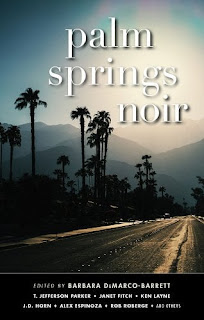
Palm Springs Noir

 Edited by Barbara DeMarco-Barrett


Akashic     2021

293 pages     Noir

I was at loose ends on Monday after a busy holiday prep weekend. I picked up Palm Springs Noir, knowing  that I would be entertained and enlightened about a city that I had been to several years ago. What I remembered best about the Palm Springs experience were the fields of wind turbines in the valley. Those wind turbines show up frequently in the short stories in the book, but apparently I didn’t have the same kind of Palm Springs experience that the characters in these stories had. I may have to go back.

In her introduction, DeMarco-Barret defines noir thus: “In noir, the main characters might want their lives to improve and may have high aspirations and goals, but they keep making bad choices and things go from bad to worse.” She goes on: “In noir, characters follow the highway to doom and destruction. They are haunted by the past, and the line between black and white, right and wrong, dissolves like sugar in water. The hero rationalizes why it’s ok to do whatever dark thing they are about to do.”

DeMarco-Barrett used that definition as she selected the stories to go into this volume of noir. The stories are just as sleezy as you might expect in a book of noir fiction, but the reader also experiences a lot of suspense and darkness. There are references to famous stars that have lived in the area and includes the music of Frank Sinatra and Elvis Presley. Through the stories we visit the places the tourist knows, like the golf courses and the pools, the mountains and the desert. My favorite place, Joshua Tree, however is spoiled by homicide, and a beautiful pool by a drowning. DeMarco-Barrett’s story concerns a brother who drowned in a mother’s pool. Could the sister have caused the drowning?

There are fourteen stories by several well-known Southern California authors. They are pure naughtiness happening in one of America’s most beautiful places. As steamy as the air. A great review in the NY Journal of Books.

I have written extensively over the years about the Akashic series of more than 100 noir books in settings all over the world. You might also like to read my description of noir and neo-noir literature. You can find it here. Stay tuned for the February arrival of Paris Noir: The Suburbs, which I will review the next time I have a day of loose ends.

Saturday, December 11, 2021

The Sentence

 By Louise Erdrich


Harper     2021

400 pages     Literary

Louise Erdrich owns the bookstore Birchbark Books in Minneapolis, which specializes in indigenous materials. Her newest novel takes place in that bookstore, and the major protagonist is Tookie, a bookseller at the store. Louise, herself, makes an appearance as well as a ghost named Flora, who haunts Tookie every day at the store.

The first half of the book is a delight. We learn about how Tookie, an indigenous woman, makes a very stupid move and ends up in prison for ten years. She reads everything she can get her hands on while she is in prison, and when she gets released, she gets a job at Louise’s bookstore. She is really intimidating looking with black eyeliner, black stompers, a nose ring and eyebrow cuff. She says, “Who would dare not buy a book from me?”

Tookie is quite an incredible woman, and the reader is totally drawn to her. Her marriage to Pollux has its ups and downs. He was the tribal policeman who was involved in her arrest. He  says, “You could be anything. You make my brain boil. You make my heart flip over. Twist in a knot. It’s like you never learned that our choices get us where we are.” But when she reaches out her arms to meet his—he slaps handcuffs on her and arrests her. When she is released from prison, they meet again, fall in love and get married.

Life improves for Tookie and the reader is drawn into her brilliance as a bookseller, as a wife, and as a stepmother/grandmother to Pollux’s daughter and her baby. But then the pandemic hits followed by the murder of George Floyd, just down the street from the bookstore. The tone of the book changes, and the reader is caught with the ferocity of life in Minneapolis as it is engulfed in protests. Everyone is scared; everyone is worried, and the air around the bookstore is filled with tear gas.

The bookstore has closed because of the pandemic and the protests, so Tookie spends a great deal of time alone in the store, pulling books from the shelves for online orders.  “Everyone who wasn’t out on the streets wanted to read about why everyone else was out on the streets.”  Oh—and Tookie spends a great deal of time fending off Flora, the ghost, who is bound and determined to inhabit Tookie’s body, mind, and spirit. Flora plays an pivotal role in the plot so I won’t go into more details about her. The reviewer in the Washington Post says that “The novel’s ectoplasm hovers between the realms of historical horror and cultural comedy.”

Interspersed with the crazy plot is the world of books and bookstores. Tookie really knows her books and is able to pick the perfect book for her customers. Titles of books are everywhere in the text—so much so, that there is a bibliography at the end of the book. Tookie also consults a dictionary frequently, and the book begins and ends with her defining her word of the day.

There is so much going on in The Sentence that I hesitate to go much further. I was entranced with a chapter about a dinner party where the conversation is about wild rice—a conversation that could only happen in Minnesota. I laughed aloud because I had cooked a wild rice casserole for Thanksgiving and I had trouble softening the wild rice, a problem that the wild rice chapter was able to solve for me.

Additionally, the narration about the protests after the George Floyd murder was compelling and profound. Obviously the author had witnessed the mayhem firsthand. I read those chapters with great attention. My niece, Cory, had been involved in the protests as a medic, and I could almost find her on the streets with Tookie’s coworker and Tookie’s husband. Spellbinding.

Louise Erdrich is one of America’s best authors. Her recent book, The Night Watchman, won the Pulitzer Prize in 2020, and I read and reviewed The Round House in  2013. She has the unique ability to weave indigenous wisdom and history with modern sensibility. One reviewer has said, "Novelists who can create vivid, plausible, living characters are rare, but novelists who also can create a believable world and a compelling story for those characters are blessed. Louise Erdrich is blessed."

Here is a terrific review of The Sentence in the New York Times. Next time I am in Minneapolis, I am going to be sure to visit Erdrich’s store, Birchbark Books. 

Monday, November 29, 2021

You Speak for Me Now

 By Sandy Graham


Kindle Direct     2021

292 pages     Fiction

The Shortlist

You Speak for Me Now is an up-to-the-minute fictional look at the state of American politics through the eyes of a couple and their young son. John and Emma were high school sweethearts, overcoming many odds, including race and disability, to marry and develop a successful business. John becomes enamored with the possibility of becoming a politician, causing a great deal of anxiety to their relationship. Ultimately, John becomes a liberal media sensation, and the target of a conservative commentator. Their home is attacked, and Emma takes their toddler son, Peter, to Canada in order to be safe.

The summary continues: “Keeping the tension mounting, You Speak for Me Now follows John and Emma through a painful separation and vicious assaults. Undaunted by death threats, a critical injury, and coming face-to-face with gunfire, the couple continues to speak, write, and sing the truth—until their message finally gets heard and acted on.”

Through the eyes of this young couple, Graham shares his own ideological convictions and deep concerns about the current state of the country. The couple has to deal with conspiracy theories, alternative facts, social media,  vigilante groups, and systemic racism, all while espousing their own political viewpoint.

Interestingly, the story is told almost entirely through dialogue, which I discovered was a little difficult to wade through. I found myself getting lost in the dialogue in much the same way that I can get lost in too much background description.

Ultimately, You Speak for Me Now is a polemic disguised as a novel. While I agreed with most of John’s political aspirations and political viewpoints, the book ended up being too tedious for me. Specific readers, however, will probably be satisfied with Graham’s work.

I am intrigued with the author, Sandy Graham, and his journey to express his political viewpoints through his novels. Here is his website. Also an interview with reviewer, Norm Goldman. I was sent the book via his publicist. I admire Graham’s initiative and the enjoyment he gets from his writings.

Wednesday, November 17, 2021

Rebecca

 By Daphne du Maurier


Little, Brown     2013 edition

449 pages     Literary

How could I have gotten to my age as a voracious reader and never have read Rebecca? Thank goodness for my book group for reading it this month! This week I read the book and watched the 1940 movie with Laurence Olivier and Joan Fontaine. Can’t wait to discuss it with my book friends.

Well, enough of that. The plot is very basic. The narrator is an unnamed young woman who travels to Monte Carlo as the companion of a wealthy older woman. While there, she meets a wealthy widower, perhaps in his mid-40s. Maxim de Winter. Very handsome, very conflicted, very depressed. His wife, Rebecca, had drowned a year ago.  Maxim takes an immediate shine to the young woman, and they marry on the spur of the moment. Shortly after their marriage they return to his very famous country estate in England named Manderley. Our young narrator thinks she has arrived in heaven.


Instantly, the young Mrs. de Winter realizes that she is out of her element. There are signs of Rebecca everywhere. It is obvious that all the servants in the household are still mourning Rebecca’s death, particularly Mrs. Danvers, the housekeeper, who had a very long relationship with Rebecca and doesn’t want a new Mrs. de Winter in the house. For a long time, Mrs. de Winter’s only friend on the estate is the estate manager, Frank, who not only works for Maxim but is his best friend. He becomes the young wife’s best friend as well. For a while, I thought a romantic relationship might build between Frank and Mrs. de Winter, but Frank stays true to his job and his friendships.

The plot didn’t develop in the way I thought it would. It just slowly builds to a magnificent,  if perilous, conclusion. But the plot is only a part of the story. Du Maurier is a marvelous writer. Her descriptions of Manderley and the development of her characters is superb. I kept underlining terrific passages, and writing down questions I needed answers for.  

I was especially taken with this unfortune young woman brought into a situation for which there was no resolution. Du Maurier’s portrayal of this young woman and how lost she is in this environment is stunning and all-consuming.  She knows nothing about how to run a household, especially since Rebecca had run the household without error, planning enormous parties, and mastering horseback riding, sailing, and all the other skills of the leisure class. She is horribly intimidated by Mrs. Danvers, and ultimately with her arch nemesis, Rebecca. She is never sure of Maxim’s love and blames his distance on his grief over the loss of Rebecca. But as the story develops,  she gains confidence and a desire to take control of Manderley and her own life.

One reviewer says that in Rebecca, du Maurier “fuses psychological realism with a sophisticated version of the Cinderella story.” But in Rebecca, the handsome prince is old enough to be the narrator’s father. Of course, like all fairy tales, there is also a witch—Mrs. Danvers, who haunts the young woman’s every move.

I believe that Rebecca is worthy of every award it gained through the years, including the National Book Award for Fiction in 1938 and the Anthony Award for Best Novel of the Century in 2000. The Alfred Hitchcock 1940 film won the Oscar for Best Picture. It stayed pretty true to the novel with only slight adjustments to the conclusion. There is also a 2020 version of the film on Netflix.