Search

Friday, December 17, 2010

Lord of Misrule

By Jaimy Gordon


Kingston, NY, McPherson, 2010

Week 51 Fiction

It made the headlines of the local newspaper. A creative writing professor at Western Michigan University in Kalamazoo had won the National Book Award for Lord of Misrule. My ears, of course, perked up. Ah, another book for my list. Last year, two local authors had made the nomination list—Bonnie Jo Campbell for American Salvage and David Small for Stitches. (Both of those books are reviewed on these pages.)

About a week later, Jaimy Gordon appeared for a reading at the downtown library, and I was in attendance. At that point, I knew nothing of the book and nothing about the author, except that the book was published by a very small publishing company and that Jaimy Gordon had been Bonnie Jo Campbell’s teacher.

The story of the creation of Lord of Misrule is almost as interesting as the book itself. For a few years in the late 1960s, Gordon worked at a race track near Baltimore as a horse groom. She wrote a draft or two of the novel in the years following the experience, published a couple of other books, and then submitted this book to the publisher of a previous book. The publisher rejected it, and she put it away in a drawer, taking it out only to make a short story out of a couple of the chapters. It languished in her drawer for 10 years, “a huge lump standing in the way of me and progress.”

Finally, this year, Bruce McPherson, who had published another of her books, forced the book out of her drawer and submitted it in galley form to the National Book Awards committee. The rest, as they say, is history.

And now, on to the book, itself. I have to say that I had trouble making sense out of Lord of Misrule. I have no prior experience with racetracks, horses, loan sharks, groomers, or any other part of the scene, so the learning curve was severe. However, about half way through, it all began to click, and I gave up the struggle and immersed myself in the jargon, the plot movement, and the characters.

The book is divided into four parts, each named for one of the horses in the stables of the Indian Mound Downs racetrack in West Virginia. Over the course of a year, the horses are involved in four races, and there are four main characters as well; an old African American groom, a “gypsy” woman owner and trainer, and a young couple trying to make a living as horse owners. Maggie, a college-educated “frizzy haired” girl could easily be a stand-in for the author. Her boyfriend, the horse owner, is a con man in training. Over the course of a year, these horses and these people are involved in racing, feuding, fighting and death.

The horses have as much a role in the story as the people. They have personality and depth of character. The racetrack, too, has personality. “It was a complete world, but it was a flat world too—one pure unmitigated plane of being, all the way to the edge, where you fell off. Then it was all void, all menace.”

The reviewer in the LA Times sums up all these characters in one succinct sentence: “Sort the men from the horses, so similar are their slaveries, their striving for nothing, their tendency to be ruled by lesser animals.”

Part of the beauty (but I also must say, part of the difficulty) of the book lies in the language and dialogue. Gordon calls it “third person limited.” Mostly, you are privy to the thoughts of each of the characters, one voice at a time. The reader has to first figure out who is speaking in each chapter. Particularly confusing were the thoughts of Tommy, the horse owning con man. He thinks in the second person, so all his thoughts about himself are “you.” Lots of horse racing terms are bandied about. Lots of slang. I made the mistake of not reading the definition of a “claiming race” that appears before the book begins. Do read that—it will make all the difference in understanding the book.

I began underlining phrases and thoughts that I particularly felt were beautifully put, such as “blue crucifix eyes of the goat." In describing the horse Mr. Boll Weevil at the gate: “He is looking for a home all right. He’s still looking around that gate like he’s thinking about putting up wallpaper in it, making a down payment on a living room suit, moving in for life.” I could go on and on.

I would suggest that if you want to tackle this book, read a couple of reviews, particularly Jane Smiley’s review in the Washington Post. Additionally, the review in the Women’s Voices for Change website is excellent. That reviewer says, “It is, no more and no less, another of those rare and acute studies of the human condition, timeless, tragic, moving, while being firmly rooted in a place and a time brought to life for the reader’s pleasure."

The Washington Post Review:
 http://www.washingtonpost.com/wp-dyn/content/article/2010/11/16/AR2010111606968.html

The review in Women’s Voices for Change: http://womensvoicesforchange.org/book-review-lord-of-misrule-a-horse-race-all-the-way.htm

The review in the LA Times:

http://articles.latimes.com/2010/dec/06/entertainment/la-et-book-20101206

Saturday, December 11, 2010

Finding Oz: How L. Frank Baum Discovered the Great American Story

by Evan I. Schwartz
Boston, Houghton Mifflin Harcourt, 2009

Week    50   Biography
( Read aloud with my husband.)


This morning, on NPR, I was listening to an author talk about why Conan Doyle has remained a premier influence in mystery fiction throughout the century or so since he wrote the Sherlock Holmes stories. This same question, of course, can be asked about L. Frank Baum and the Wizard of Oz stories. The author Evan T. Schwartz was reading The Wizard of Oz to his 7-year-old daughter and enjoying her wide-eyed amazement at the magic of the story. He realized there might be a book in the details about how the classic got written. Finding Oz, a biography of sorts, is the result. I say “of sorts,” because there is a great deal of speculation involved in Schwartz’s narrative. One reviewer noted that Schwartz prefers “the conjectural to the concrete and never let the facts get in the way of a good story.”

Schwartz traces the restless life of L. Frank Baum from his childhood to the writing of the book. He “does a fine job of unearthing the origins of Oz, and of portraying Baum as very much a man of his times--the era of the vanishing frontier and the uneasy transition from Victorianism into modernity.” As the author says, Baum crossed paths with much of the national narrative during his life, and Schwartz feels that he filed away all those influences until they appeared in his novel. For instance, Baum’s mother-in-law was the radical feminist Matilda Joslyn Gage. Many thought her to be a witch, but to Frank, she was a benevolent mother and a huge influence in his life. The family moved to Chicago just before the Chicago World’s Fair, and many people, including Schwartz, feel that the “White City” in Chicago became the Emerald City. Thomas A. Edison and P.T. Barnum, important personages of the time, may have been the influence for the Wizard.

L. Frank Baum
L. Frank Baum moved his family (wife Maud, and sons Robert, Harry, Kenneth, and Frank Jr.) many times trying to find a formula for making money that would provide for his family as well as satisfy his soul. He tried theatre, sales, retail, and journalism. His family moved from New York State, to territorial South Dakota, and finally to Chicago where he settled into a career as a journalist. It was in Chicago reporting on the World’s Fair that the stories he had been telling his children began to take form and his first book, Father Goose, His Book,was published. Other published stories followed until he completed his masterwork, The Wizard of Oz.

The actual story of the writing of the Wizard of Oz takes up only one chapter close to the end of the book. Schwartz develops all the influences so fully that you are always saying, “Of course. That seems logical.” All the time, however, you are wondering, “Is that really true or merely conjecture?” He feels that the Baum family was greatly influenced by a trendy religion called Theosophy, a religion that was an amalgamation of Buddhism and other eastern religions, and that the book may have been a result of that spiritual journey.

On another level, Finding Oz is fascinating journey through the years following the Civil War from the perspective of L. Frank Baum, who lived through those days and made the most of it. From the historical perspective, the book is a valuable read. We watched a documentary about the Chicago World’s Fair, Expo: Magic of the White City. We had seen it before, as we were reading another Chicago book about those times—The Devil in the White City by Erik Larson. To readers new to the Chicago World’s Fair, these books would serve as great companion narratives, but be sure to watch the DVD, which we got from Netflix. It puts the whole scene into perspective.

My husband, Thell, has been a lifelong fan of the Wizard of Oz, and we have a set of about ten very ancient books. I asked him if he thought the Wizard of Oz would have remained classic children’s literature if not for the 1939 movie. He responded that he thought that the brilliance of the movie fixed itself into the American psyche, and thus we consider the books to be of the same classic mode. Like all good stories, there are many ways to interpret it and many ways to find meaning in it. We were regaled the other evening to the road show, Wicked, a brilliant speculation about the origins of the witches of Oz. There is something about that story!

Here is Evan Schwartz telling about his book on his book’s website:
 http://www.findingoz.com/schwartz-videos.htm

A review of the book in the Washington Post:
http://www.washingtonpost.com/wp-dyn/content/article/2009/05/11/AR2009051103059.html

An interview with Schwartz by "The Daily Ozmapolitan":  http://www.frodelius.com/wirelesstelegraph/schwartz.html

Sunday, December 5, 2010

America's Prophet: Moses and the American Story

by Bruce Feiler
New York, William Morrow, 2009

Week 49   Religion

Although Bruce Feiler’s book, Walking the Bible, has looked intriguing to me as it sits on the church library shelf, America’s Prophet: Moses and the American Story is the first of his books that I have read. Feiler uses a chatty style, with a lot of interviews and first-person travel to support his thesis, which is that American history is full of the story of Moses and the Exodus.
He outlines three themes of the Moses story and how they have influenced American life. The first theme is the courage to escape oppression and seek the Promised Land. The second theme is the tension between freedom and law (liberty and order). The final theme is the building of a society that welcomes the outsider and uplifts the downtrodden.

To this end, he tells several stories of Moses in America beginning with the Pilgrims and their journey to the Promised Land. He then moves on to stories about George Washington and liberation, and Harriet Tubman and slavery. A major chapter concerns Abraham Lincoln, who comes to mind, of course, as the Moses of his generation. The last major story is about Martin Luther King and his sermon the night before his death—a Moses who did not get to the Promised Land. Along the way, he discusses the symbolism of the Liberty Bell, the Statue of Liberty, and even Superman. One interesting side story concerns Cecil B. DeMille and his creation of the movie, The Ten Commandments.
It is fascinating to read about the many, many times in our history that Moses and the Exodus stories have been part of the rhetoric of the great speeches of American history. “The promised land,” “flowing with milk and honey,” “let my people go,” “Uncle Tom.” Feiler speaks of slavery, freedom, and covenant as being aligned with Egypt, Red Sea, and Sinai. Because the story of Moses transcends one particular religion—in ways the story of Jesus cannot—it can be told again and again, can be applied to many different scenarios, and can even be used in two conflicting situations. He suggests that the Moses story was used by both the North and the South prior to the Civil War. The South used the story to point out that Moses delivered the law to the people with a set of rules to be obeyed. They emphasized that slavery was maintained throughout the story. The North spoke of the freedom aspects of the journey and the fact that all people are created equal. He says, “If North and South could not agree on the same Bible, they could not sit in the same pews, and if they couldn’t sit in the same pews, they couldn’t stay in the same union.” “What started in religion happened next in politics.”

This is not an exhaustive study, nor is it academic or intellectual. After I read it, I wondered why Feiler chose to discuss Cecil B. DeMille but not Brigham Young. Perhaps that was too big a can of worms! At the same time, I believe that he made his point. Moses is a better model for America than Jesus, because his story has universality to it with broad themes and is the one Bible story that most Americans know and can relate to. One can invoke Moses’ name without being called religiously biased. I kept seeing the men’s book study group at church reading it for it has great potential for book discussion groups.

I was amused that concurrent to reading this book, I was reading my new copy of The New York Review of Books (December 9), which included a review of the Stewart/Colbert rally in Washington. It contained a portion of Jon Stewart’s speech at the end of the rally when he spoke as himself and not his character. He said, “We know instinctively as a people that if we are to get through the darkness and back into light we have to work together. And the truth is, there will always be darkness. And sometimes the light at the end of the tunnel isn’t the Promised Land. Sometimes it’s just New Jersey.” In the same issue, an article about Glen Beck quotes him calling for a third great awakening because “God is not done with you yet, and he is not done with man’s freedom yet.” So, the story of Moses lives on.

A review in the Washington Post:
http://www.washingtonpost.com/wp-dyn/content/article/2009/11/13/AR2009111301385.html

An interview on CNN:
http://www.cnn.com/video/#/video/bestoftv/2010/08/11/ac.muslim.debate.cnn?hpt=C2

Bruce Feiler’s website: http://www.brucefeiler.com/

Friday, December 3, 2010

Please wait for me!

Dear friends, I am late with my blog this week. I will have it up on Saturday night Dec. 4 or at the latest on Sunday. The book is America's Prophet by Bruce Feiler and it's good enough to wait for.

Saturday, November 27, 2010

The Harvard Psychedelic Club

By Don Lattin


New York, Harper One, 2010

Week 48 Non-Fiction

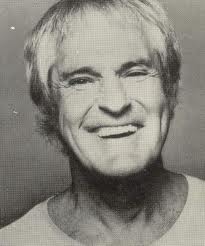
The Harvard Psychedelic Club is an absolutely delightful account of the invention of the 1960s-era psychedelic movement and four of the men who were involved—Timothy Leary (of course), Huston Smith, Richard Alpert (Ram Dass), and Andrew Weil.

Timothy Leary
Richard Adkins (Ram Dass)
Lattin has monikers for each of these men, whose lives he follows during this time: Timothy Leary is called the Trickster, Richard Alpert, the Seeker, Huston Smith, the Teacher, and Andrew Weil, the Healer. For these four men and others on the periphery of the movement (names such as Aldus Huxley, Allen Ginsberg, Alan Watts, and William S. Burroughs), it all began with some mushrooms. Timothy Leary was a psychology researcher at Harvard along with Richard Alpert. They had both had experience with sacred mushrooms, and later LSD, and they believed that all kinds of society’s ills could be solved by using these drugs to reform behaviors. Huston Smith, a Methodist minister and religious scholar was interested from the standpoint of religious experience, and Andrew Weil was an undergraduate Botany major, who was also interested in holistic healing.

Huston Smith
Leary and Alpert had the OK from Harvard to experiment with LSD on graduate students, and the very first time they gave LSD to a group was on Good Friday of 1962 in a small sanctuary at Marsh Chapel on the campus of Boston University. Huston Smith had gathered a group of graduate students and seminary students from BU, Andover Newton, and Harvard. While the traditional Good Friday service was being held in the large chapel upstairs, a Good Friday of an entirely different sort was being held in the basement sanctuary.

This story was quite incredible to me. I was at Boston University School of Theology just three years later and never once heard about the Good Friday experiment. I knew about LSD being available on the Quad outside of the chapel, but not about that infamous day. I have emailed a friend from graduate school to ask her if she remembered anything. We’ll see what she says. Maybe I was just too naïve and too in love with a farm boy from Indiana to know about such things.

Andrew Weil
It wasn’t long before the scientific experiments with LSD began to include a lot of recreational use and Leary and Alpert entered a whole different realm, an East Coast version of the scene that was developing in San Francisco. Leary and Alpert were fired from Harvard when Andrew Weil told the Harvard Administration that they were giving LSD to undergraduates. At that point, the illegality of drugs became a major issue, and the scientific nature of therapy using LSD and other psychotropic drugs lost its momentum. Lattin says: "One of the ironies of this story is that the excesses of Leary and Dass in the whole LSD crusade prompted this backlash, not just against drugs as recreation, but a backlash against serious scientific research into what beneficial uses they have. And not just LSD. There are dozens of designer psychedelics that have been developed: ecstasy, MDMA, stuff most people had never heard of. Only now, 50 years later, is there research on their use for the treatment of depression, posttraumatic syndrome, alcoholism, end-of-life use for people who are facing their own mortality. Even Harvard is studying LSD again, with government money. There's been a whole renaissance of serious, reputable, legitimate research into psychedelic drugs; it's taken that long to get over Leary."

Lattin follows these four men through the next few years. Leary became the guru of the psychedelic movement with the mantra “turn on, tune in, drop out.” Alpert became a guru of another sort when he realized that one couldn’t find wholeness with LSD and found solace in Hinduism and Buddhism. He changed his name to Ram Dass and gathered many followers through the years. Huston Smith remained a renowned scholar of world religions and wrote a signal book on the subject, The World’s Religions. Andrew Weil is respected in the field of holistic healing and is a purveyor of vitamins and natural foods.

Three of the four are still alive. Huston Smith is 91 and has just written his memoirs. Ram Dass is 89 and remains a teacher via the Internet. Andrew Weil is 67 and still very active in his businesses. All were interviewed for this book. Timothy Leary died in 1996.

The Harvard Psychedelic Club is a trip down memory lane, and certainly for anyone of my generation, it is a fun read. It is full of interesting characters and stories. When Leary was arrested for possession of marijuana, G. Gordon Liddy was the federal marshal involved. John Lennon wrote Leary’s campaign song when Leary ran for Governor of California – Come Together! There is lots of invented dialogue, but Lattin did interview many of the survivors of the sixties, and he apparently had enough experience with LSD as a young man to know what he is writing about.

Is this a profound or important book? No, of course not. Is if a fun read? For sure! I found a short review of it in The New York Review of Books which convinced me to read it.

A review in the New York Times:
http://www.nytimes.com/2010/01/08/books/08book.html

An interview with Don Lattin in Time Magazine:
http://www.time.com/time/arts/article/0,8599,1952812,00.html

Tuesday, November 16, 2010

Case Histories

By Kate Atkinson


New York, Back Bay Books, 2004

Week 47 Fiction

I bought Case Histories two or three years ago and began to read it twice. I frankly don’t know why I stopped, but it sat buried in my pile of “to read” books until I dragged it out last week. I wanted to read a mystery as a means of escape. This book did not deserve to be buried. It should have been read long ago, but then it wouldn’t have had a place on the blog.

It is anything but a formulaic murder mystery. First, the detective, Jackson Brodie is a gem of a character, peripatetic and idiosyncratic. (How about those words!) Second, the victims and those surrounding them are equally intriguing. And third, the book is very funny in spots, which is rather unique considering how grisly some of the crimes are.

The first part of the book is the set-up. Jackson Brodie, a former police detective and now a private investigator, is hired to bring closure to three cold cases that the police have long since given up. One is the mysterious disappearance of a toddler, the second the unsolved murder of a teenaged office worker, and the third is the search for a girl whose mother is a convicted ax murderer. Jackson, who is the divorced father of a ten-year-old girl himself, takes all these victims to heart as he seeks to bring closure to each of the families.

Luckily for the reader, the chapter headings tell who the chapter is about and when the action took place. Otherwise, it is a bit hard to fathom exactly where you are in the narrative. Much like A Visit from the Goon Squad, there is quite a bit of movement from the past to the present and back, but like a good mystery, seemingly wandering plots become tied up at the end.

There is also a lot of coincidence that in the hands of a less-talented writer might cause the reader go “Oh, yeah! Like that’s going to happen.” But it is all so skillfully woven that the reader never once doubts the coincidences. As the Washington Post reviewer mentions, “In a mystery where the dead bodies turn out to be far less important to the story than the survivors who mourn them, the coincidences seem almost mystical: markers of a grand, melancholy design built from the sorrows of anyone who has ever lost a loved one and never gotten over it.”

The families of the victims are a remarkable set of characters, each one so finely drawn that the reader could almost sketch them on a piece of paper. As readers of murder mysteries know, this is a rare thing in this genre, especially when there are this many stories being told. Some of the characters are downright funny, especially the two middle aged sisters, who had been young girls when their little sister disappeared. Their bickering and flirting with Jackson brings on some delightful chuckles. The New York Times reviewer notes, “ Although solutions and surprises abound, in Case Histories Atkinson is less interested in detailing the steps of an investigation than in exploring the rough and tumble that happens along the way. Her humor -- and she is a very funny writer -- is the sort that comes from being able to see the way happiness and sadness can emerge from the same situation. Her reach is certainly long enough to touch cruelty and grief, but it also extends far in the opposite direction -- all the way to joy.” And the Washington Post reviewer says, “Kate Atkinson...seems to have intuited that the most compelling mystery of all isn't necessarily whodunit, but rather howtodealwithit.”

Kate Atkinson had written several novels before Case Histories, including the Whitbread Award winner, Behind the Scenes at the Museum, but the detective Jackson Brodie was a character worth exploring further, and so there are three other Brodie mysteries, including One Good Thing, When Will There Be Good News and the soon-to-be released, Started Early, Took My Dog. Coming, as well, is a BBC One television series called Case Histories.

Here is the New York Times review quoted above:
http://query.nytimes.com/gst/fullpage.html?res=9B0DE2DA143EF936A35751C1A9629C8B63

And the review in the Washington Post:
http://www.washingtonpost.com/wp-dyn/articles/A6296-2004Dec16.html

Her website: http://www.kateatkinson.co.uk/

and a YouTube of her reading about Jackson Brodie:
http://www.youtube.com/watch?v=Hn5i_ZuIDC4

Friday, November 12, 2010

Love and Summer

By William Trevor
New York, Viking, 2009

Week 46 Fiction

I am always amazed when an author comes into view that I know nothing about—such is the case with William Trevor, an Irish author of great renown, 82 years old. I first learned of Love and Summer in the pages of Bookmarks Magazine, where all the reviewers gave the book highest marks.

This is a small book—only 224 pages—about a small place in Ireland during a much simpler time—the late 1950s. One might consider the characters quite ordinary small town people, yet they all have complex life histories, and the plot, while quiet and contemplative, is also thick and dense.

The characters are those that you would expect in a small town, the businessman, the nosy busybody, the local character, the cleric, the farmer with a tragic past, the innocent young woman, and the stranger in the village. One would expect that these characters would collide and interact; this is the nature of pastoral-type novels. Yet, Trevor fills these characters with so much longing, so much loneliness, and, as one reviewer suggests, so much hope, that this book is compelling and enlightening. The New York Times reviewer says “(Trevor)…has somehow turned the nondescript and the habitual into the exceptionally vivid and particular.”

I especially liked the character of Miss Connulty, the “spinster” who has just inherited the local boarding house. She is a deeply unhappy, unfulfilled woman who sees all and knows all. Yet she, like all the characters in the book, has a past. She had an affair as a young woman with a salesman who boarded at their house. She became pregnant and went to a distant city to have the baby, who was then adopted. She sees the young wife Ellie meet up with the young stranger in town, Florian, and instinctively knows that there will be trouble. She tries to warn Ellie that no good is going to come from their meeting by telling Ellie, “Love is a madness.” But in a stroke of genius on the part of the author, Miss Connulty does not expose the lovers, as one would expect, but makes plans to pick up the pieces and save Ellie when the affair falls apart, as she knows it will.

By the time the simple plot moves to its inevitable climax, the reader has so much invested in the characters that there is no stopping—it has to be read in one sitting. Once done, there is a big sigh as you realize that you have just finished a masterpiece with no grand finale, no conclusion, but just life at its richest.

I lived in a very small town for 18 years and these characters ring very true for small town living, where much of life is in the details. One reviewer says: “He (Trevor) makes the ordinary come alive through rich details accompanying everyday habits.” There can be a great deal of comfort in small town living that comes from knowing your neighbors very well, knowing their habits and their circumstances. What is not comfortable about small town life is that your neighbors know you very well, your habits and your circumstances. But the characters in Love and Summer draw their strength from the sense of community, and for all their sadness and longing, this is where they want to be.

William Trevor has been called one of the finest prose stylists writing today. Other books in his lexicon include, The Story of Lucy Gault, Death in Summer, Fools of Fortune, and Cheating at Canasta, a highly acclaimed collection of short stories.

Here is a review in the Washington Post:
http://www.washingtonpost.com/wp-dyn/content/article/2009/09/17/AR2009091703691.html

An interview from the BBC:
http://www.bbc.co.uk/radio3/johntusainterview/trevor_transcript.shtml

The New York Times has a list of resources about the author. Very helpful:
http://topics.nytimes.com/topics/reference/timestopics/people/t/william_trevor/index.html