Search

Monday, September 27, 2021

Lightning Strike

 By William Kent Krueger


Atria     2021

400 pages     Thriller

 Let me just say at the outset that I love anything by William Kent Krueger, and its not just because he writes about Northern Minnesota, my home turf. The protagonist in his mystery series, Cork O’Connor, is a skilled detective, and a former sheriff in the same community that his father Liam O’Connor served as sheriff. Krueger does a great job laying plot groundwork and creating the setting. His characters are realistic, recognizable, and in most cases, redemptive.

Lightning Strike is a prequel to the Cork O’Connor series. Cork is 12 years old, a product of the Aurora community. He is one quarter Ojibwe on his mother’s side, so he is particularly attuned to the native community; his grandmother lives in the community; and he has several friends who are Ojibwe. Liam, his dad, while no stranger to the native community, is not particularly trusted as the sheriff, even though he has interactions every day within the community. He is an Irish-American transplant from Chicago, and therefore an outlier. Cork's grandmother, on the other hand, is one of the matriarch's of the Ojibwe community.

The plot begins when Cork and a friend are hiking near Iron Lake in the Superior National Forest when they make a horrifying discovery. One of the community elders, Big John Manydeeds is hanging from a tree at Lightning Strike, a clearing where Cork and his friends often hang out. The native community doesn’t believe that Manydeeds could possibly have committed suicide, and Liam comes to believe that it was a homicide. A cryptic note at the murder scene and Cork’s insistence that he help his dad with the case keep away the rush to judgement that Liam might have initially considered.

I loved how Krueger created the character of 12-year-old Cork. Like most boys his age, he hangs out with his buddies, delivers his newspapers, and maintains his natural curiosity. Every parent of boys can identify with Cork, his parents, and his grandmother as they deal with this pre-adolescent detective. He and his friends are haunted by the specter of Manydeeds hanging in the tree, and they set out to help Liam solve the crime. Because they know the streams leading into Iron Lake from Boy Scouts, they know that Manydeeds knew the streams as well as they do. On one excursion, the boys find Manydeeds’ canoe in one of the streams leading into the big lake, and they know that they are on the right track to solving the crime. On the other hand, Krueger does not glorify the boys and their detective skills; they are not the Hardy Boys.

Like he did in This Tender Land, Krueger explores the complexity of the white community’s relationship with the Native community. I appreciated this so much. One reviewer says that he “shows rather than tells why with a subtle but unflinching touch.” Additionally, Cork is growing in his understanding of his own relationship to the Ojibwe community, what that means, and what his response and responsibility should be. At the same time, I could relate to the communities and the scenery of the region. It is a unique Minnesota spot.


Can you read Lightning Strike without having read any of the other eighteen Cork O’Connor detective books? I think so. I have read several of them, including Manitou Canyon, which I reviewed in 2016. Krueger believes that Lightning Strike is the perfect starting point. He says, “I love that this look at Cork has allowed me to explore the complex relationship between father and son, so important in shaping Cork into the man who occupies center stage in the series.”

 I highly recommend Krueger’s novels. If you haven’t read any of them, start now. Here is his website.


Monday, September 20, 2021

The Book Woman of Troublesome Creek

By Kim Michele Richardson


Sourcebooks     2019

308 pages     Literary

The most important aspect of an historical novel is the research that goes into it. Richardson has done an incredible job in creating an historical novel that is both creative and meticulously researched. It is the story of a young woman in 1930s Kentucky Appalachia. My book club read it this month and we had a lively discussion last week.

Cussy Mary, a young single woman, lives in the hills and hollers of Kentucky during the 1930s. She has applied and been accepted as a pack horse librarian, which was a job for women, sponsored by the WPA. Her job is to deliver books by horseback to the people on an established route in her mountain neighborhood. She knows her readers well and works very hard to find the materials that her clients want—everything from the classics to magazines to newspapers, many weeks old by the time they get to Cussy. She makes her way through the mountains on a mule named Junia, who is both her protector and best friend as well as the carrier of the library materials Cussy carries.

What distinguishes Cussy Mary from other young women of the area is her color. She is one of the last of the Blue People of Kentucky. This was a clan of blue-tinged people that had populated the area for several generations. They have hidden in the hills because they have been ridiculed and shunned and classified as inbreds, which they were not. Thank goodness for Google, because I had never heard of the blue people, but when I read up on it, I discovered that this aspect of the story line was remarkably true.

It would appear that Cussy (or Bluet, as she was called by her clients) had more than three strikes against her, but she is strong and feisty, and she prevails. She loves her job and takes pride in the help that she offers her clients. People rely on her to read stories to them, bring them news from the outside world, and even provide food if necessary. Her work is a testament to the power of reading and books.

There’s a lot of heartbreak in The Book Woman of Troublesome Creek, not just for Cussy Mary and her father, a miner, but also for the people in the hills. The description of life is remarkable, thanks to the skilled writing of Richardson. Here is one paragraph. “I found the tiny cabin stitched into a mountain, tarred with black pine and stingy sunlight. In the yard, two crows drank from mud puddles. Overhead, more cawed before dropping down to scar the yard. Two sick chickens peeked around the corner of the cabin, their combs and wattles festered with the fowl pox. A rawboned dog dozed on the crumbling porch. Junia snorted, and the pup raised its mangy body and flattened its flea-bitten ears before slinking off.” Inside, Cussy finds her favorite child client, Henry, and his siblings suffering from pellagra, and Henry is dying.

One reviewer says that Richardson doesn’t “pull punches when it comes to describing the hardscrabble lives of the hill people.” Yet, I considered the descriptions to be fairly realistic, contrasted, as they were, with great moments of hope and kindness. I do have to say that the ending is quite abrupt, and we are not allowed enough time to enjoy the happiness that Cussy Mary finds as she discovers true love and her life moves on to another level. The only weakness I found in a totally engrossing book.

This is a terrific review in bookreporter.com.  Kim Michele Richardson’s website. It looks like she has a follow-up book about Cussy’s daughter, Honey, called The Book Woman’s Daughter. It arrives next May.

I can highly recommend The Book Woman of Troublesome Creek. I especially enjoyed the pictures of the Kentucky Pack Horse librarians that come at the end of the book. 

Saturday, August 28, 2021

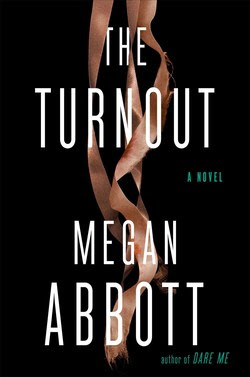
The Turnout

 By Megan Abbott


G.P. Putnam’s Sons         2021

352 pages     Thriller

It has been several days since I finished reading The Turnout by Megan Abbott, and the book is still haunting me! Abbott writes, “Ballet was full of dark fairy tales.” And for Marie and Dara Durant the fairy tale darkness comes true as they prepare their young ballet students for this year’s coming production of the Nutcracker. Marie, Dara, and Dara’s husband Charlie run the school that the girls’ mother started in the 1980s. Charlie was a dancer, but because of a variety of injuries, he can no longer dance. The three live in the same house that the family has owned for years and teach in the building that has been the studio since the beginning. This is the foundation for the "dark fairy tales."

Marie is at odds with her sister and husband and has moved to the attic of the studio to live. The heater she is using causes a fire which burns one of the studios just as the Nutcracker practices begin in earnest. The insurance agent recommends Derek, a local contractor, to do the repairs, and Derek invades the space, the lives, and the minds of Marie, Dara, and Charlie. Tension builds, illusions are shattered, and lives are destroyed.

The Kirkus reviewer says that “the mesmerizing prose will keep you turning the pages.” Abbott does a spectacular job of setting the scene. For example, after Derek begins the work on the ruined studio, she writes, “All day there were thunderous tremors from Studio B, the floors coming up, leaving a haze of debris. The old planks like matchsticks, the smell of mold, mice. The silt from decades of young girls: stray earring studs, hair elastics, dusted ribbons, Band-Aids curled with browned blood.” Every moment is filled with these captivating images.

 While there is no murder to solve, the plot is surprisingly propulsive. Abbott knows a lot about ballet, and while the main plot concerns the relationship between the ballet studio owners and Derek, the contractor, the sub-plot of putting together the Nutcracker ballet with all the tryouts, the practices, the pre-teen girl drama, the injuries, and the costuming is enlightening and repulsive at the same time. I don’t believe that I will ever look at ballet lessons and/or The Nutcracker with the same eyes again. One reviewer notes, “For all its beauty, ballet can be born out of pain.” Abbott explores that concept relentlessly, and the reader moves from fond childhood Nutcracker memories to visions of turned ankles, spiteful girls, and unraveled dreams.

Last week, I had a timeout trip to the family cottage on Lake Michigan. The Turnout was the book I took with me to read. I knew it had been well reviewed, and I felt that it would be an excellent respite book. I was in and out of the house all day and took several walks—every time the tension in the book got to be more than I could stand. It was about 10:30 at night when other family members arrived. According to my Kindle I was 97% through the book. How dare they come when I was this close to getting some final closure on the horrifying events! I excused myself as quickly as I could and retreated to my bedroom to bring the whole sordid affair to the end.

Here is a fascinating interview with Megan Abbott on the Book Page website.

Just published, The Turnout is on many lists of the best books of summer 2021. 

Monday, August 23, 2021

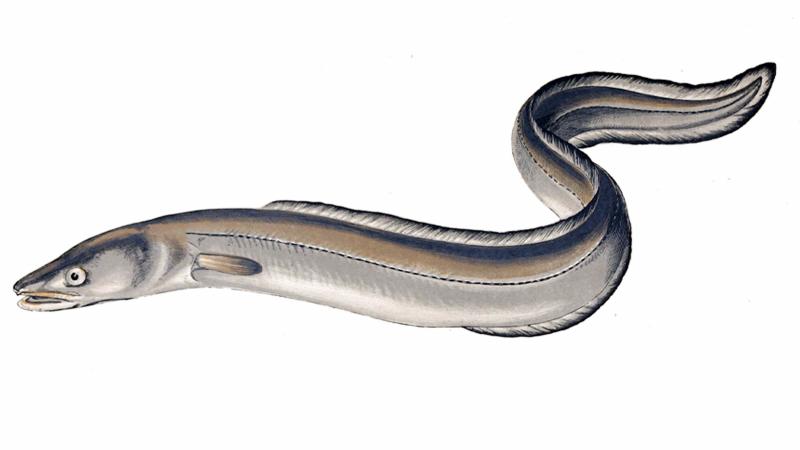
The Book of Eels

 By Patrik Svensson


Ecco     2019

245 pages     Nature

What! I read a book about eels? Who would imagine that could happen? And what’s more—I read it for our book group.

Even more—I loved it!

As I began to read the book, I researched the author, Patrik Svensson, who is a journalist based in Malmo, Sweden. That amazed and surprised me, because I had just finished reading and reviewing Alexander McCall Smith’s Detective Varg book, The Man with the Silver Saab. Detective Varg is based in Malmo, Sweden. What a remarkable coincidence, even though McCall Smith’s book didn’t mention eels.

When reading The Book of Eels, you ponder three topics: the science of eels; the history of the study of eels; and Svensson’s childhood memories of fishing for eels with his father.

Here are things that I learned that I never had known before about eels, because, frankly,  I had never thought about eels—not once in my life. Nor had I ever seen an eel or eaten eel—although apparently my friend Jan has. Although I did eat a tarantula when I was in Cambodia, but that’s another story.

1)      European and American eels are born in the Sargasso Sea, which in case you didn’t know, is a portion of the Atlantic Ocean. Svensson says, “The Sargasso Sea is like a dream: you can rarely pinpoint the moment you enter or exit; all you know is that you’ve been there.” For my part, I didn’t know there was such a place as the Sargasso Sea.

2)      There are four stages in the life of the eel. They are: willow leaf (tiny little things) when they leave the Sargasso Sea and head a thousand miles or more to European or American waters. Next stage is the glass eel. This is what they are when they arrive in fresh water rivers and streams. They are yellow eels for the majority of their lives, which can be 30-50 years. Glass eels are aged eels who return to the Sargasso Sea of their birth to procreate before they die.

3)      Scientists through the ages have pondered the existence of eels and the mysteries surrounding them. Svensson says, “Science has come up against many mysteries, but few have proven as intractable and difficult to solve as the eel. . .Somewhere in the darkness and mud, the eel has managed to hide away from human knowledge.” Among the many unsolved mysteries has been the lack of understanding about how they procreate.

4)      Many famous scientists have studied eels, including Aristotle, Freud, and Rachel Carson.

5)      Eel fishermen and women are a breed apart as well. Svensson remembers with great love and respect fishing with his father as well as attending eel festivals and visiting eel fishing sites. This is the memoir part of the book, and Svensson dos a great job of binding together the science and the history into the memoir as well as engaging the reader in a lot of metaphysical musings.

Here is something that amused me as I was reading The Book of Eels. When I would mention to someone that I was reading about eels, nearly everyone would ask me if I had seen the recent documentary about an octopus, My Octopus Teacher, which won the 2021 Oscar for best documentary. It can be viewed on Netflix. I can understand the connection; both the movie and the book are about elusive animals and about the mystery surrounding them.

The book was a New York Times notable book for 2020. Here is the review. The reviewer called it “strange and nerdy”

Since I read the book, I have come across several interviews with Svensson and several You Tube videos about eels. I think its quite remarkable that this book has developed such a following and expansion of the study of eels. I am so grateful to the member of our book group who introduced me to this wonder of a book. 

Tuesday, August 17, 2021

Who Do You Want to Be When You Grow Old

 By Richard J. Leider & David Shapiro


Berrett-Koehler     2021

145 pages     Self-Help

“Everyone is getting older; not everyone is growing older.” This is the premise of a compact, but profound look at aging. The authors, Leider and Shapiro, have been friends for many years. They are intrigued by their own aging as well as the concept of aging in general, and offer a guidebook to thinking about the process, without offering definitive conclusions. My husband and I used the book as our morning reading exercise, taking turns reading and then discussing what we read.

If we have fewer outward responsibilities, the authors propose, then we should have greater inner growth. This has been one of the concepts that my husband and I have struggled with for several years. The struggle has never been more pronounced than when we were reading this book. My husband has always felt that he would work at his business forever. Yet, now that he is in his 80s, he has begun to rethink his purpose. Each day, as we read, he considered some alternatives; finally he announced that he was going to stop working on Fridays. I almost fell over with surprise. Now we will see if he is going to follow the plan.

On the other hand, I have been completely retired from my career as a librarian for several years, and this year, I retired from my editing business. The retirement was very short-lived, because family members needed covid-related help with children. I felt lucky that my schedule was flexible enough that I could help out. The points made in Who Do You Want to Be When You Grow Old helped me in my decision-making. One of the authors’ points is that often retirees feel a loss of relevance. Lucky for me, I still feel very relevant.


Finally, the last chapters of the book concern death and dying, and we were able to have some significant conversations about what we still wanted to do, but also how we felt about dying. There are excellent discussion questions in the last chapter: “1) What do you think happens when you die? 2) How would you like to die? 3) What gifts do you want to leave the world before you die?” These questions offered us several hours of thought and discussion. As we read each morning, we felt our relationship grow closer and our conversations become more significant. We would certainly encourage couples to have these discussions. I am very grateful to the authors for opening these doors for us. I appreciated their personal stories as well as the people they quoted. The final discussion questions are excellent.

“The path of purposeful aging is a choice to wake up every day with the intention to grow and give.”

An interview with the authors.


Friday, July 30, 2021

The Man with the Silver Saab

 By Alexander McCall Smith


Pantheon     2021

256 pages           Mystery (?)

I am not at all sure in which genre to place The Man with the Silver Saab, and indeed, any of the writings of Alexander McCall Smith. In seeking out the answer to that question, I noticed that few of the reviewers had the same classification. Some placed it in mystery, some in humor, and some in satire. I might place it in philosophy because McCall Smith infuses his philosophy of life into every aspect of the narration.

This particular series, the Detective Varg series, takes place in the Swedish city of Malmo, where Ulf Varg is the head of the Department of Sensitive Crimes. The Man with the Silver Saab is the third book in the series, but the reader can drop in anywhere. (That’s part of the genius of McCall Smith.) Although we never truly understand what constitutes a “sensitive crime,” we end up loving Ulf Varg, especially as he deals with a very boring colleague, as well as with the colleague for whom he has romantic feelings.

The reader quickly finds that the plot is secondary to the musings of the characters and the laugh-out-loud humor that infuses every moment of the plot. I genuinely laughed out loud several times and was emotionally touched at other times. An example of this occurred when Varg was looking out the window. He noticed a man and woman walking down the street. Their pace changed when the man took the woman’s arm. It appeared to Varg that they belonged together. “That was security; that was completeness. And then two young men came along, walking behind them, and one of the young men suddenly put an arm around the other, and Ulf thought: that is exactly the same thing.” It is this type of narration that warms the heart of the reader and expresses the soul of the author. There is a sensitive crime, to be sure, a strange situation with a painting and the art expert who believes his life is being damaged because of bad publicity. And here is a picture of a silver Saab, similar to the one Varg drives, in case you, like me, had no idea what a Saab looks like.

The Man with the Silver Saab is a perfect read for warm summer days and a foil against disturbing daily media. McCall Smith says in an interview with the Scottish newspaper, The Herald: “I, like most people, want to be uplifted and presented with a vision of the world that has some hope in it. I believe in being positive – what’s the point of being negative? It doesn’t improve life. I don’t want to be a Pollyanna claiming everything is wonderful, but we should leave room in life for the positive and uplifting.”

Not much more needs to be said about The Man with the Silver Saab except to escape into its pages. Publisher’s Weekly suggests that the plot is “gossamer thin” and “almost irrelevant. The novel’s pleasures lie in Ulf’s philosophical asides and comments on how to live a good, just life.” You will be uplifted and will contemplate how Ulf lives a life that is filled with kindness and civility while solving sensitive crimes. Oh, and you will discover how a veterinarian could possible sew the nose of a dog upside down after the dog has been attacked by a squirrel.

I have read—and I am sure you have as well—several books in the many series of Alexander McCall Smith. He wrote and published 7 books during the pandemic, including a new entry in the No. 1 Ladies’ Detective Agency series, my personal favorite.

Thursday, July 29, 2021

Great American Road Trips Scenic Drives

 Readers Digest  2020

191 pages     Travel

I returned recently from a trip to my hometown of Duluth, Minnesota, where my grandchildren and I had ventured up the North Shore Scenic Drive, one of the scenic drives featured in Reader’s Digest’s lovely Great American Road Trips Scenic Drives. Imagine my pleasure when I returned home to find a copy of the book waiting for me, sent by the publicist. 

Beautiful photographs lure the reader into marvelous vistas and not-to-be-missed sites. I immediately searched out the section on the North Shore Scenic Drive that we had just visited. We had been on Highway 61 on a dramatically beautiful day, eaten at Betty’s Pies in Two Harbors, jetted down the alpine slide in Lutsen, saw the Split Rock Lighthouse on the horizon, and let Gooseberry Falls wash over us. It had been a glorious day, so it was fun to read the narrator’s take on the drive that I knew so well. What is not told is the magnificence of the city of Duluth, which on the three nice days of the year is the most beautiful city in America.  


I then went to the Table of Contents and checked off all of the scenic roads I had traveled, and it was a nostalgic pleasure to read about all the wonderful places I had been—17 I think. I especially enjoyed remembering the Heart of the Palouse outside of Spokane, which a friend drove us on. (We had not known a thing about the Palouse before our ride.) I also loved our visit to Door County, Wisconsin, and Monument Valley in Arizona and Utah.

Several years ago, my sister gave us the book, The Most Scenic Drives in America, a detailed look at 120 drives all over the United States. It was published in 1997 by Reader’s Digest. The current book, Great American Road Trips Scenic Drives, is more compact and easier to handle than the older version. The book gave me renewed interest in taking a scenic autumn trip to the Central Adirondack Trail in New York this year.

Read this book and get inspired! Happy trails to you!